



AUSTRIA
La República de Austria es un país situado en el mero corazón de Europa. Limita al norte con Alemania y Chequia (República Checa), al este con Eslovaquia y Hungría, al sur con Eslovenia e Italia y al oeste con Liechtenstein y Suiza. Su territorio está dominado en gran parte por la cordillera de los Alpes, cuenta con innumerables lagos y el río más caudaloso que lo cruza es el Danubio. No tiene salida al mar.
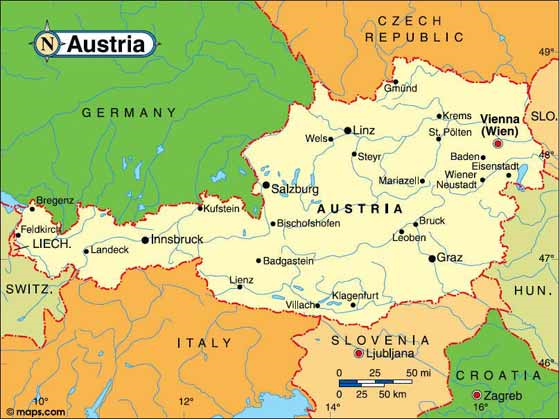
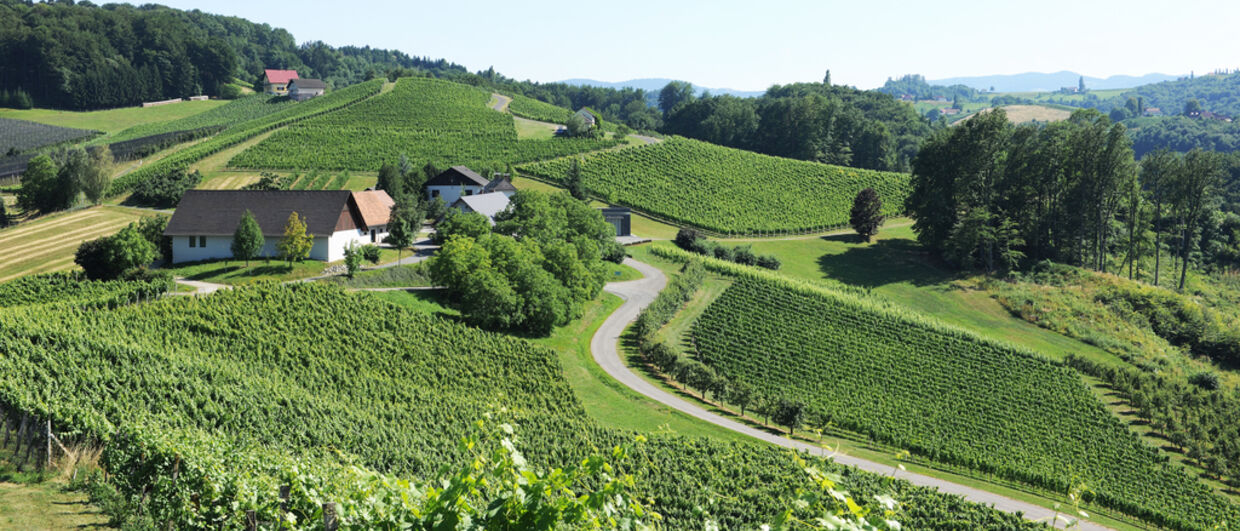
Viena, la capital de Austria, siempre ha sido epicentro de grandes acontecimientos históricos donde emperadores fijaron su residencia y hoy en día es referente de muchas organizaciones internacionales. Por su parte, Salzburgo con sus magníficos festivales de música es una ciudad mágica que nunca deja de impresionar a sus visitantes por su belleza y sus tradiciones. Pero Austria es mucho más, es un país conformado por nueve estados federados y cada cual tiene sus propias riquezas naturales y tursísticas. Por citar un ejemplo, el estado de Estiria -llamado el “corazón verde de Austria”, al sureste colindando con Hungría y con Eslovenia, es una región montañosa que en el pasado era muy productiva y la montaña de Erzberg sigue siendo una de las minas más importantes en Europa. Forma parte de la ruta de vinos austriacos, que tiene de gran calidad aunque sean poco conocidos en México.
Increíbles personajes austriacos de la historia, la música y del arte nos han legado una riqueza cultural a través de muchos siglos. Los Habsburgo, Mozart, Strauss, Mahler, Klimt, Schiele son algunos de los nombres muy conocidos que forman parte de la preciosa historia y cultura de este hermoso país, cuya arquitectura es también notable, como el Palacio de Schönbrunn o el Wiener Staatsoper (Teatro Estatal de la Ópera de Viena) por sólo mencionar dos.
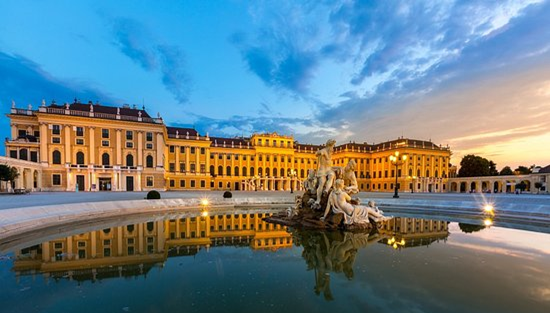
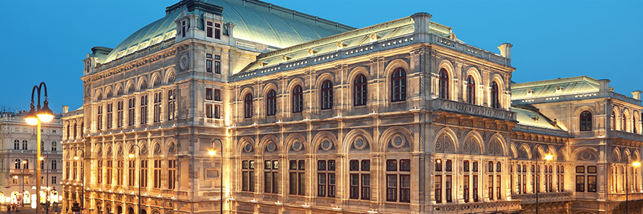
Y si hablamos de los Habsburgo, bien sabemos que Fernando Maximiliano José de Habsburgo-Lorena nació el 6 de julio de 1832 en Viena (murió asesinado el 19 de junio de 1867 en Querétaro), al nacer recibió los títulos nobiliarios de archiduque de Austria y príncipe de Hungría y Bohemia. Años más tarde renunció a tales títulos y otros para convertirse en el Emperador Maximiliano I de México, dirigiendo el Segundo Imperio Mexicano de 1864 a 1867. Llegó al puerto de Veracruz en la fragata Novara el 28 de mayo de 1864.
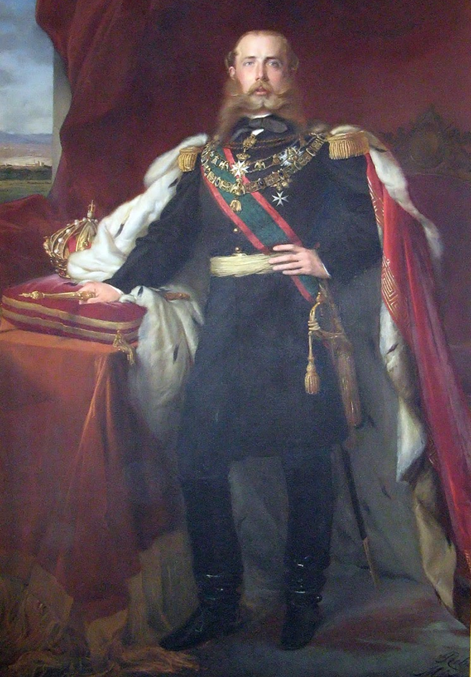
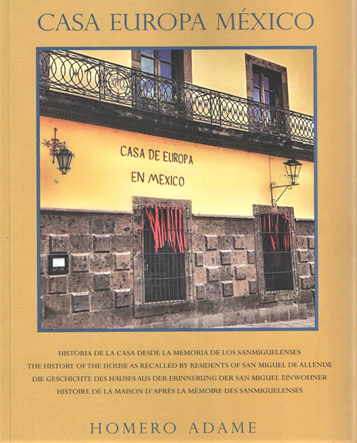
Y para nuestra micro historia en San Miguel de Allende, ¿sabías que Maximiliano pernoctó dos noches en la mansión de lo que es nuestra sede de Casa Europa? Eso fue el 13 y el 14 de septiembre de 1864, tal como se consigna en el libro histórico de la casa.
Casa Europa México recomienda…
Tomarnos el tiempo para conocer algunas de las maravillas de Salzburgo.
Y también disfrutar completa la ópera Tosca, con subtítulos en español.
Referencias de Internet:
Los créditos de imágenes aparecen al pie de la imagen correspondiente.
Adaptación de textos: Sylvia Bussey y Homero Adame