



CIUDAD DEL VATICANO
Casa Europa México presenta…
Técnicamente, Ciudad del Vaticano, o simplemente El Vaticano como mejor se le conoce, es el país más pequeño del mundo en territorio y en población, aunque por ahí en el Mar del Norte, a escasos 10 km de las costas inglesas, existe una ex-plataforma petrolera de 550 m2 llamada “Principado de Sealand” que se jacta de ser el país más pequeño del mundo, lo cual podría ser excepto que allí no vive nadie, ni tiene edificios ni nada. Así que lo borramos de este tema y dejamos al Vaticano como lo que es oficialmente, el país más pequeño del mundo territorialmente hablando, que en realidad es una ciudad dentro de otra Ciudad (Roma), es un estado soberano sin salida al mar dentro de otro estado o región (Lacio) y es un país dentro de otro país (Italia), es decir, El Vaticano sólo colinda con Italia desde cualquier ángulo. Su extensión territorial es de 44 hectáreas (0.44 km²) con alrededor de 800 habitantes, que si esa cifra se convierte en metros per cápita lo hace ser el país más poblado del mundo, y más urbanizado también toda vez que no tiene industrias ni campos agrícolas. Su economía se basa totalmente en el turismo, la venta de suvenires y entradas a museos, así como el pago de indulgencias, diezmos y lo que genera la organización católica en todo el mundo.
For English, click → The Vatican City
El origen de El Vaticano se remonta a la época etrusca, pues donde hoy en día se ubica la Santa Sede era una necrópolis custodiada por Vatika, la diosa pagana de la Muerte. Siglos más tarde, durante el Imperio Romano, el antiguo cementerio se había convertido en el Circo Romano. Cuando el apóstol Pedro fue crucificado, lo sepultaron cerca del Circo y por considerársele el primer pontífice de la iglesia católica, los peregrinos empezaron a ir hasta su tumba. En el año 324, Constantino I el Grande ordenó construir un santuario sobre la tumba de Pedro. Fue el Papa Julio II quien hacia 1500 comenzó a construir la actual Basílica de San Pedro.
Sin embargo, el antecedente directo de Ciudad del Vaticano como país es entre el año 752 y 1870 con los Estados Pontificios que conglomeraban territorios teniendo a Roma como capital y al Papa en turno como la autoridad civil. Esto terminó en 1871 cuando el rey italiano Víctor Manuel II tomó Roma y la declaró capital de Italia.
Ciudad del Vaticano es un país con innumerables curiosidades en su estructura social, política, demográfica, diplomática, pues no sigue los cánones establecidos ni las normas convencionales. Por ejemplo:
- A quienes nacen allí, que son muy pocos, no se les concede la nacionalidad Vaticana, ésta se les da a los diplomáticos y empleados de las nunciaturas mientras están en el cargo.
- No hay un idioma oficial en El Vaticano, pero el que más se habla es el italiano, aunque es en realidad un país multilingüe, casi como la Torre de Babel, tan así que es el único lugar del mundo donde se habla el latín.
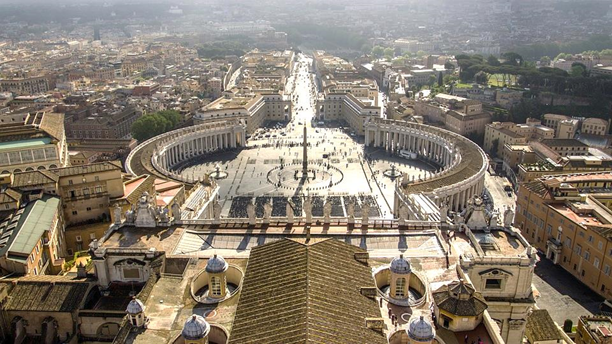
- De todos los obeliscos de origen egipcio que existen en el mundo, el que está en la Plaza de San Pedro (antes en el Coliseo Romano), es el único que no tiene jeroglíficos. Si alguien sabe por qué, agradeceríamos nos lo dijera.
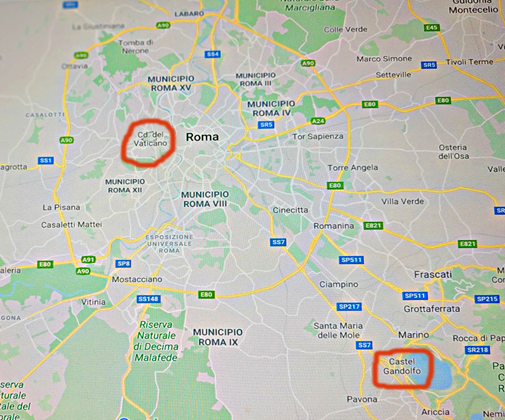
- El Vaticano tiene propiedades por todo el mundo, pero dos de ellas son oficialmente parte del Estado Vaticano, el Palacio Pontificio de Castel Gandolfo que es residencia de descanso del Papa junto al lago Albano, a 20 km al sur de Roma, y la Basílica de San Juan de Letrán que se encuentra en el centro de Roma, pero no pertenece a Italia, sino a El Vaticano.
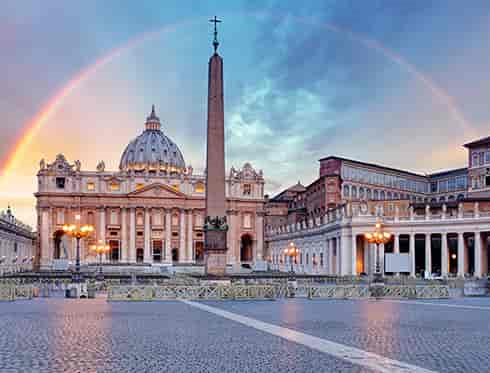
Si hablamos de cultura representativa de El Vaticano es claro que nos referimos a la cultura de la religión católica, teniendo a la arquitectura, la pintura y la escultura como sus mayores exponentes en la Basílica de San Pedro, la Capilla Sixtina, la plaza de San Pedro y los Museos Vaticanos.
http://www.vatican.va/various/cappelle/sistina_vr/index.html
Entre los Museos Vaticanos podemos mencionar: el Museo Chiaramonti, el Museo Gregoriano de arte egipcio y de arte etrusco, el Museo Pío Clementino y la Pinacoteca Vaticana, inaugurada en 1932, pero que empezó a conformarse como colección en 1790. Actualmente cuenta con 460 obras repartidas en 18 salas con cuadros desde los siglos XII-XIII hasta los del siglo XIX. Entre la invaluable colección evidentemente hay piezas de algunos de los mayores artistas italianos, como Caravaggio, Giotto, Leonardo y Rafael.
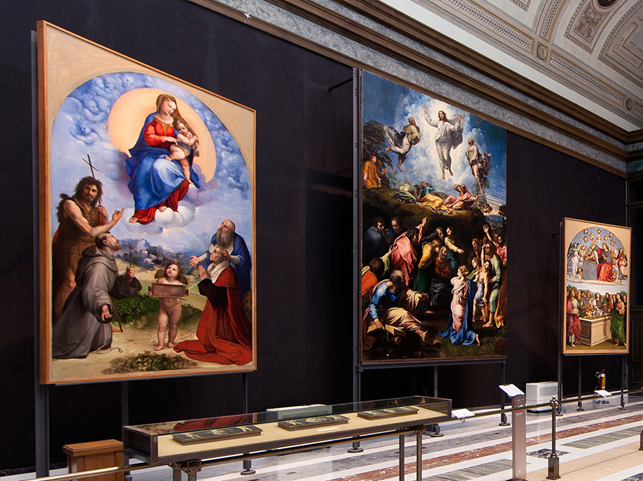

Stanza della Segnatura, Musei Vaticani, Città del Vaticano.
Foto tomada de Facebook de Sentiero d'Arte
Pero el arte no se limita a la pinacoteca ni lo religioso sino que hay en grandes cantidades en todo El Vaticano y se dice que ninguna obra ha sido adquirida, toda donada. También se dice que todo artista tiene entre sus metas saber que una pieza suya está expuesta en algún rincón del Vaticano y no es por cuestión de fe o credo sino de estatus para “estar donde hay que estar”. Como simple ejemplo: muralistas mexicanos de izquierda, ateos o anti iglesia están allí, como Rivera o Siqueiros.
Casa Europa México recomienda…
Una visita virtual de 26 minutos por la Capilla Sixtina (explicada en castellano).
Referencias de Internet:
Los créditos de textos e imágenes aparecen al pie de la imagen correspondiente.
Adaptación de textos: Homero Adame
The Vatican City text translation into English: Pat Grounds